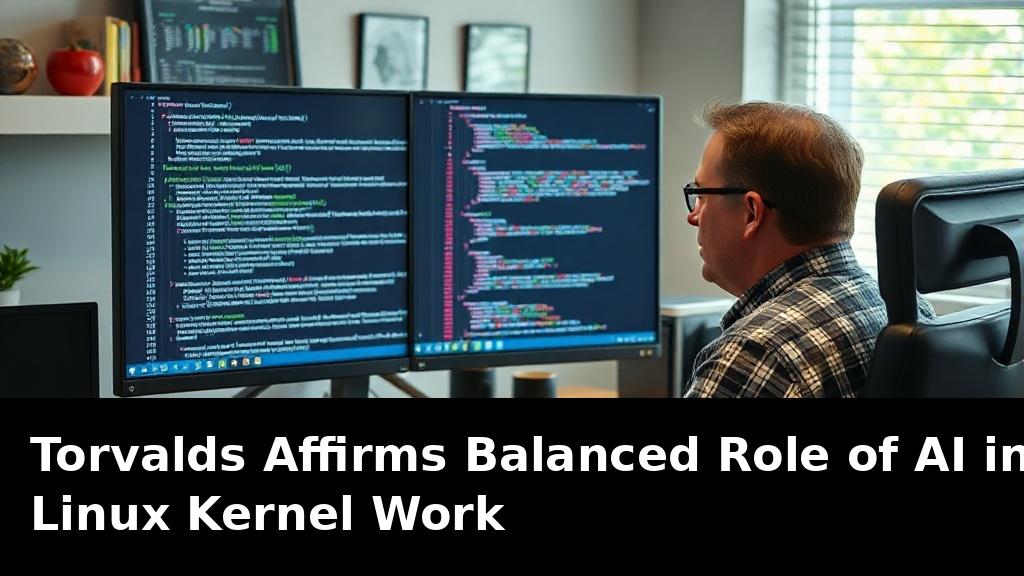
Linus Torvalds, the creator of the Linux kernel, has clarified his position on artificial intelligence tools within open-source development. While acknowledging past frustrations with AI-generated reports, he now emphasizes that Linux remains open to measured adoption of such technologies.
In recent correspondence, Torvalds stated that the project does not belong to any anti-AI camp. He noted that AI-assisted security scanning can surface issues efficiently yet also increase workload for maintainers through duplicated findings. The key, according to Torvalds, lies in directing these tools to support rather than overwhelm human reviewers.
This stance follows earlier concerns about excessive AI-driven vulnerability submissions that rendered parts of the kernel security mailing list nearly unusable. Torvalds highlighted the duplication problem arising when multiple researchers apply identical models to the same codebase.
Developers retain full autonomy in choosing their tooling. Torvalds indicated he would not engage in debates aimed at restricting others from experimenting with AI, provided the overall quality of contributions remains high.
Beyond security applications, Torvalds has previously observed that AI can substantially raise programmer output. Such productivity gains could prove valuable in sustaining the kernel’s rapid evolution amid growing complexity.
One notable implication involves maintainer sustainability. Large projects like the Linux kernel rely on a limited pool of experienced reviewers; AI that reduces repetitive tasks may help alleviate burnout without replacing human judgment on architectural decisions.
Another consideration concerns community norms. As AI capabilities advance, projects must establish clear guidelines on disclosure and verification to preserve trust among contributors who value transparency in code provenance.
Torvalds’ comments reflect an evolving perspective that prioritizes practical outcomes over ideological resistance. By focusing on integration that aids maintainers, the kernel community can explore AI benefits while mitigating associated risks.
The discussion underscores broader questions about automation in critical infrastructure software. Effective policies will likely emerge from ongoing experimentation rather than blanket prohibitions.